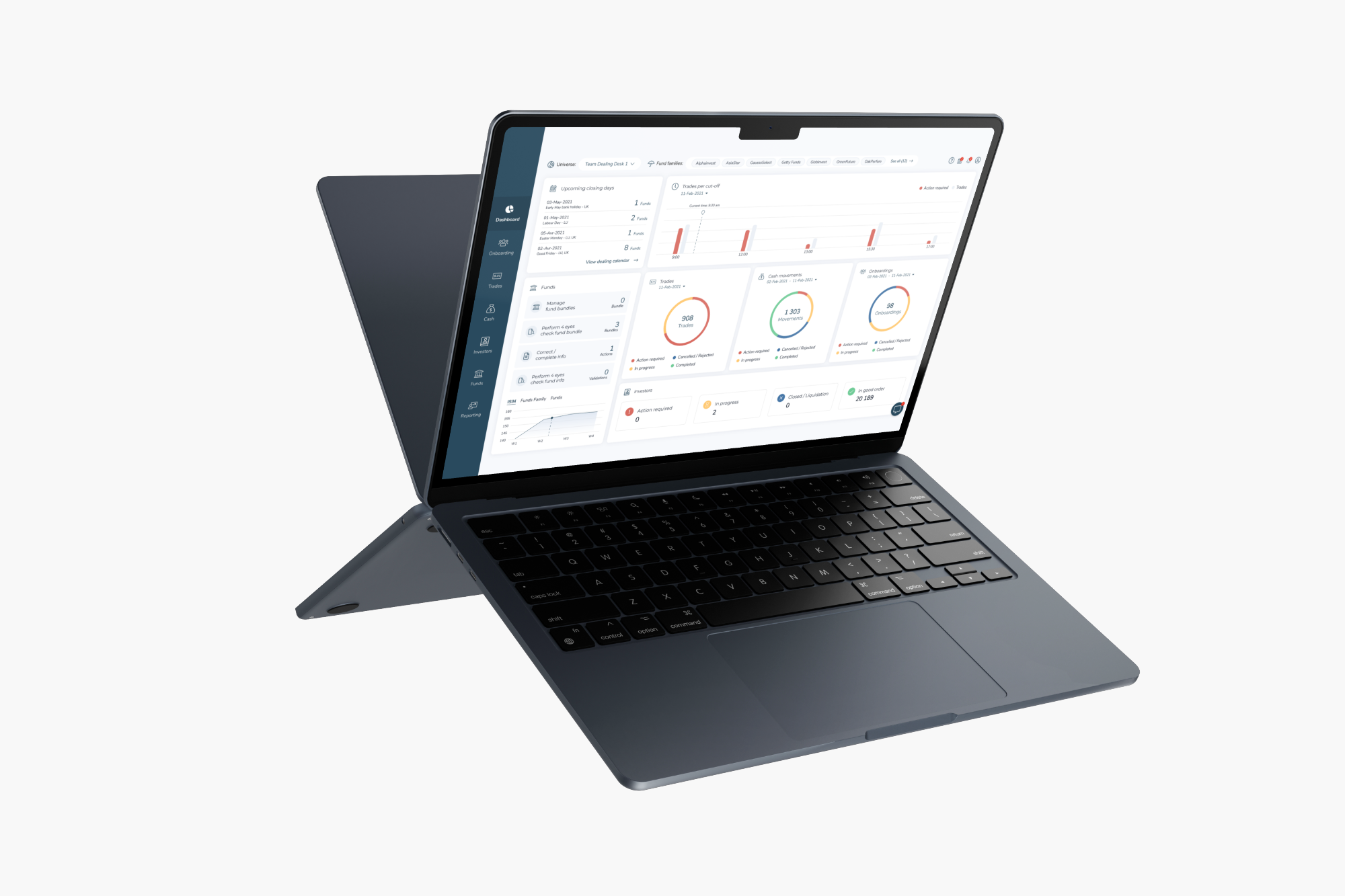
FundsDLT
Role: Senior then Lead UX Designer | Period: Aug. 2020 – Jul. 2024 | Context: B2B SaaS · Investment fund industry · Hybrid, Luxembourg-based
Act 1 - Building the foundations (2020–2021)
FundsDLT was building a blockchain-based SaaS platform to digitise and simplify the distribution of investment funds, a process that still relied heavily on faxes, manual data entry, and fragmented communication between transfer agents, distributors, and asset managers. I joined in August 2020 as a UX Designer consultant, as part of a small team that included two other designers and a lead. We started from the research phase and worked through the full design process to launch.
1. Research and Definition
- Stakeholder interviews and secondary research (whitepapers, articles, definitions)
- User interviews with operators, operation managers, advisors and client service
- Field studies: on-site observations at banks and transfer agencies
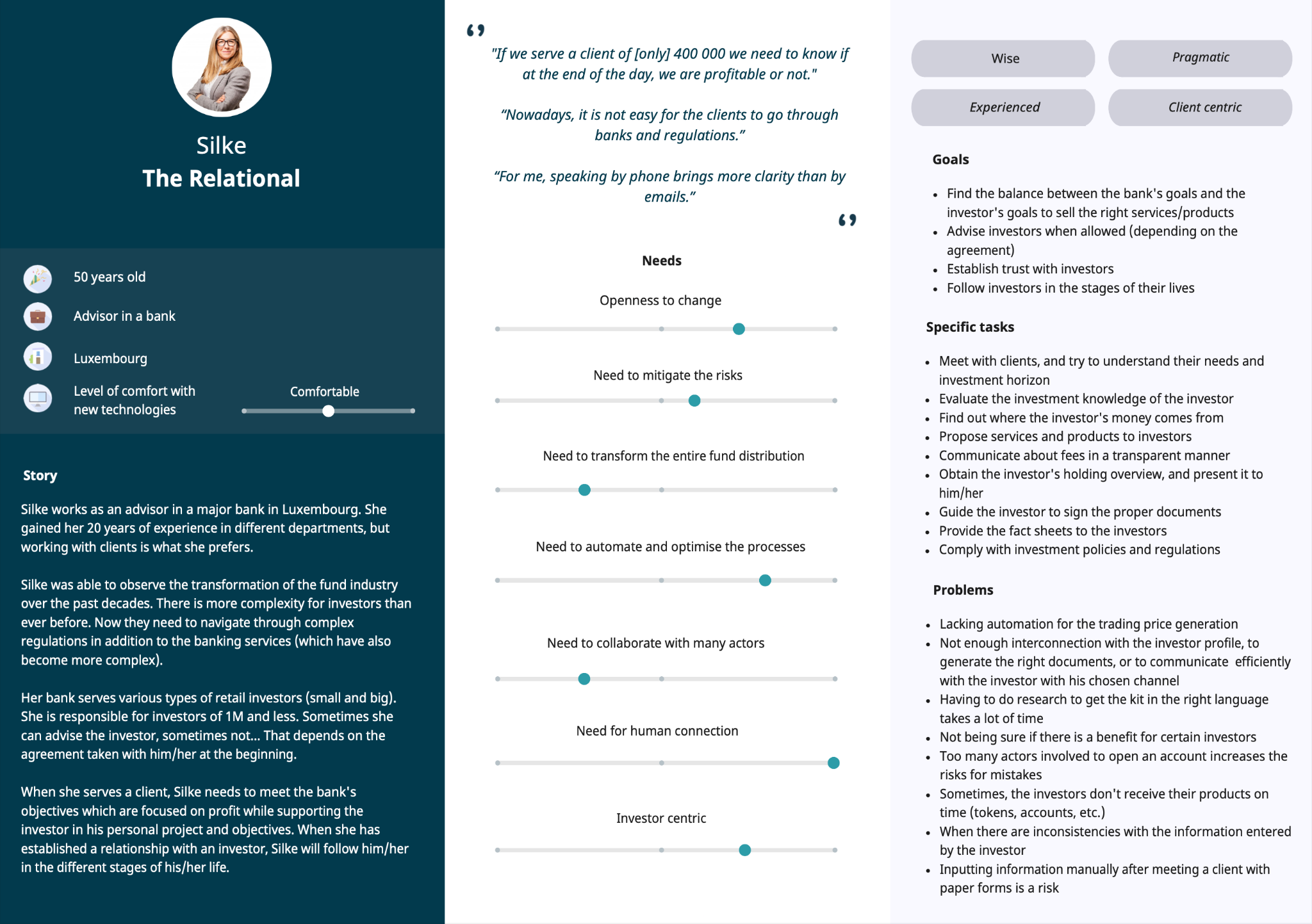
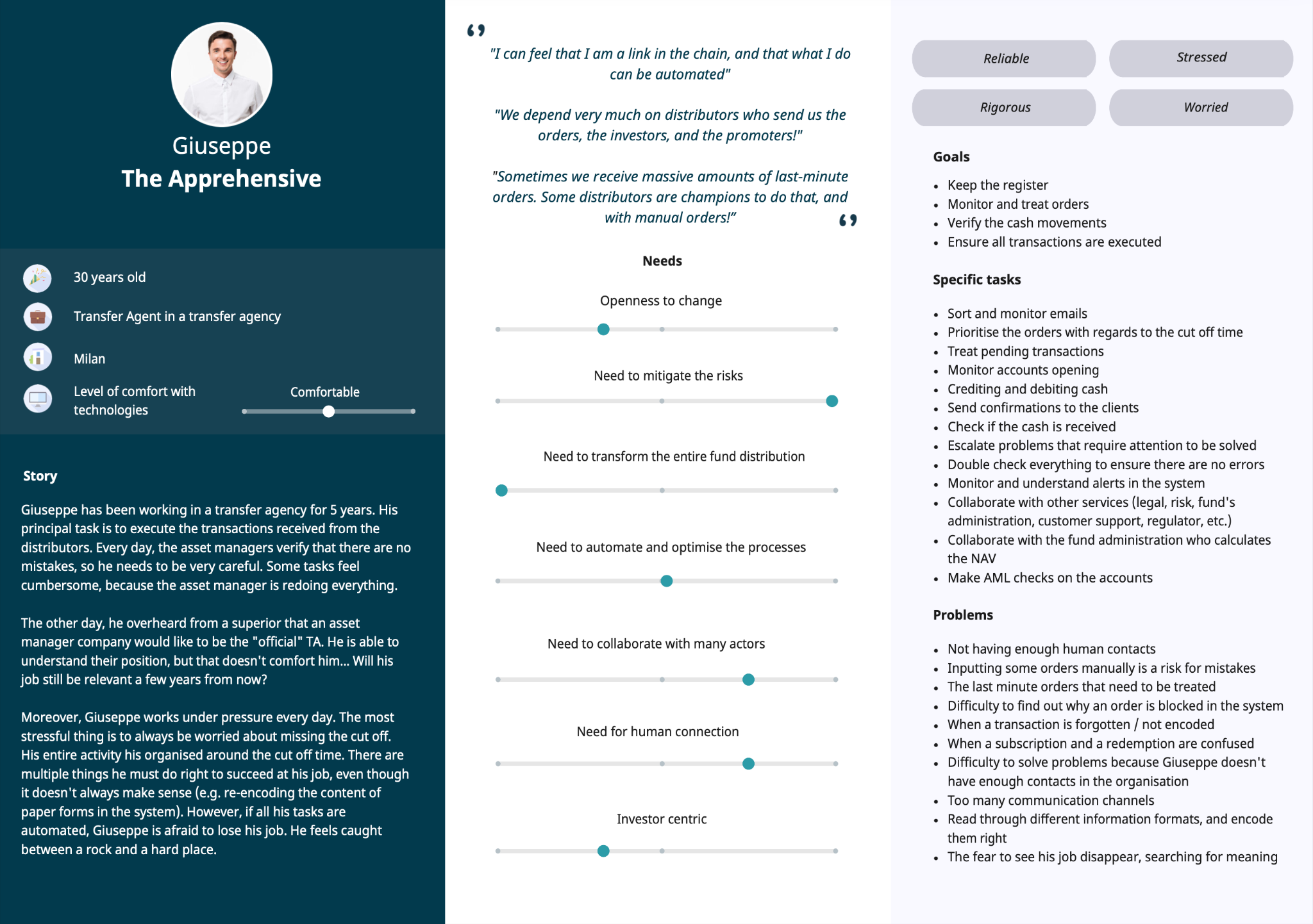
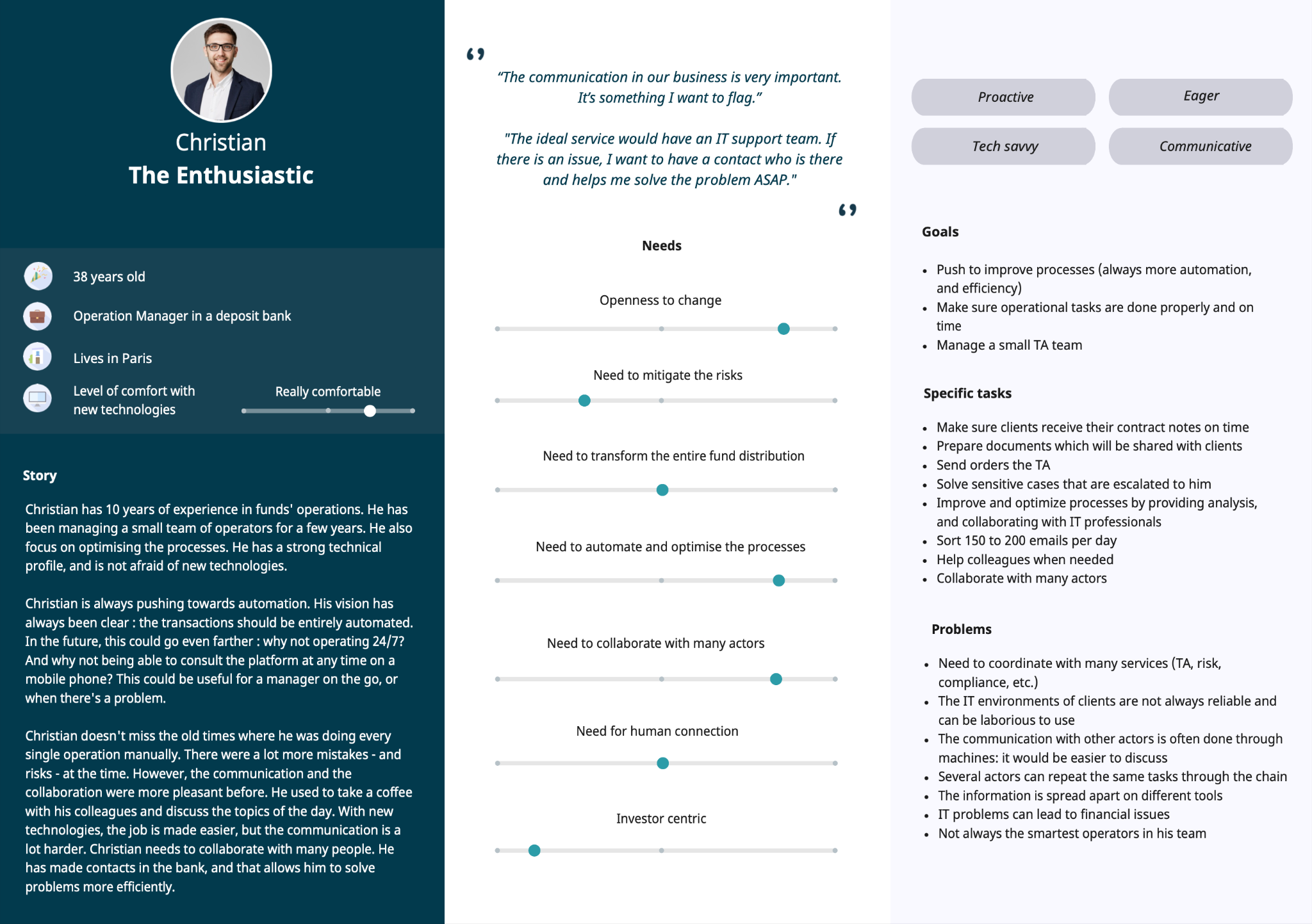
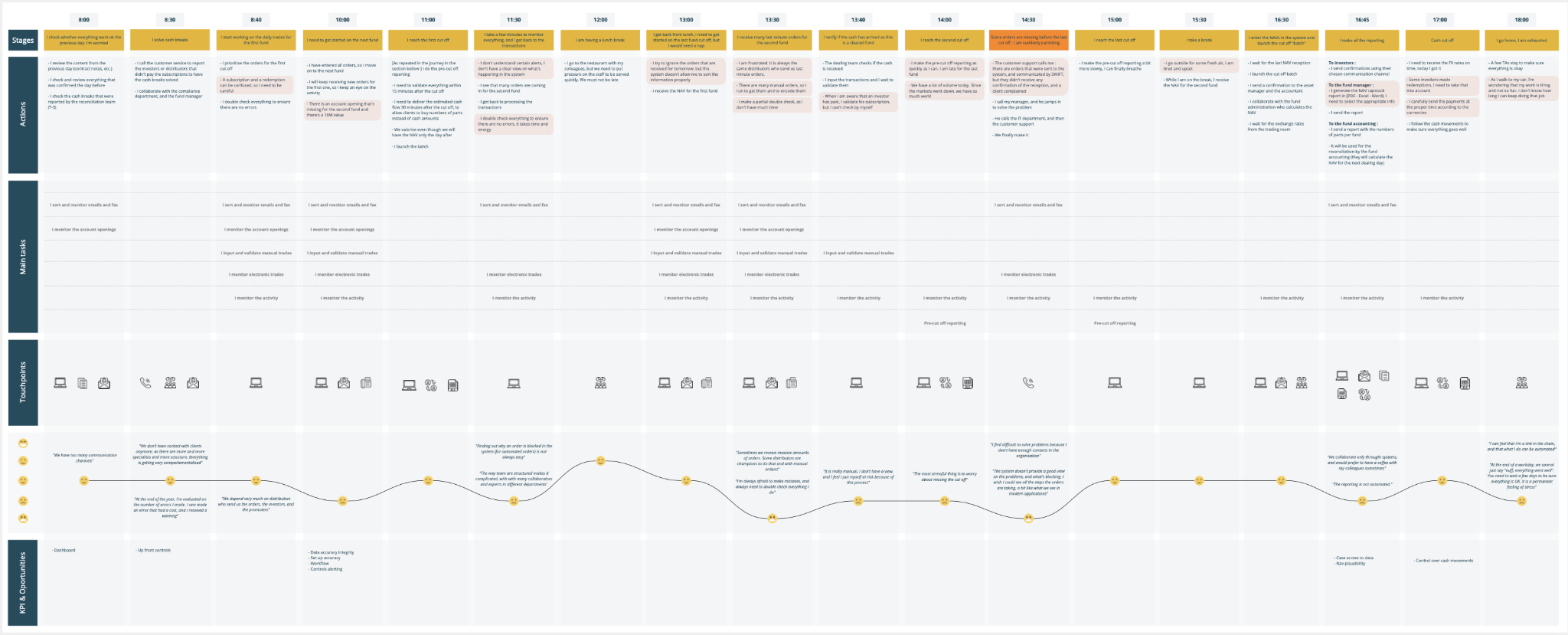
- Personas and user journeys co-created during workshops with stakeholders and team members
Examples of pain points:
- Orders are received mainly by fax and e-mail.
Operators have to enter a large amount of data manually, which is repetitive and time-consuming for them, and increases the risk of error.
Generating documents and reports that have to be sent daily is tedious and time-consuming.
2. Ideation
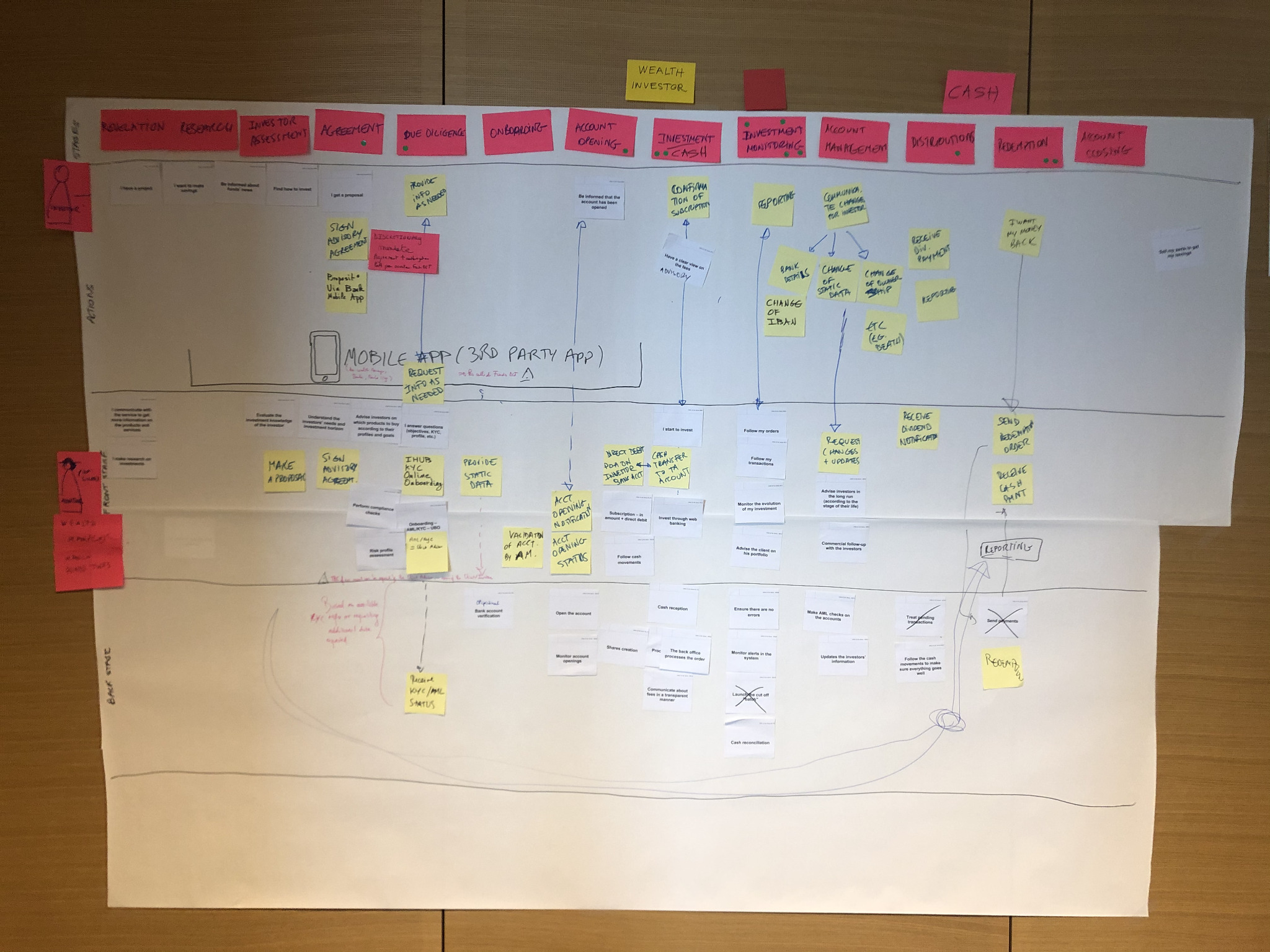
2 on-site workshops and 1 remote workshop with stakeholders and team members to define the service blueprint to be, with the following 3 layers:
- Investor (retail or institutional)
- Front-office (e.g. financial advisors)
- Back-office (e.g. transfer agent operators)
At the end of this phase, it was decided to focus on “The Apprehensive” (persona 2), whose pain points were the highest priority according to the workshop results. Knowing that addressing these problems would inevitably help to tackle some of the other personas' issues.
3. Information Architecture
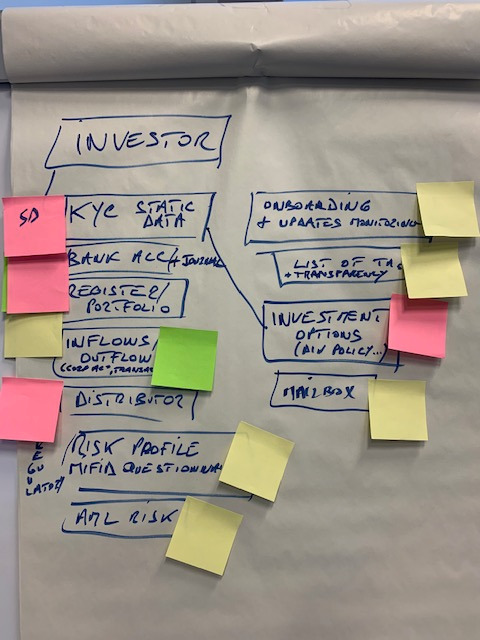
Workshop with stakeholders and analysts to define the interface structure, the main categories and the links between the various elements.
4. Prototyping
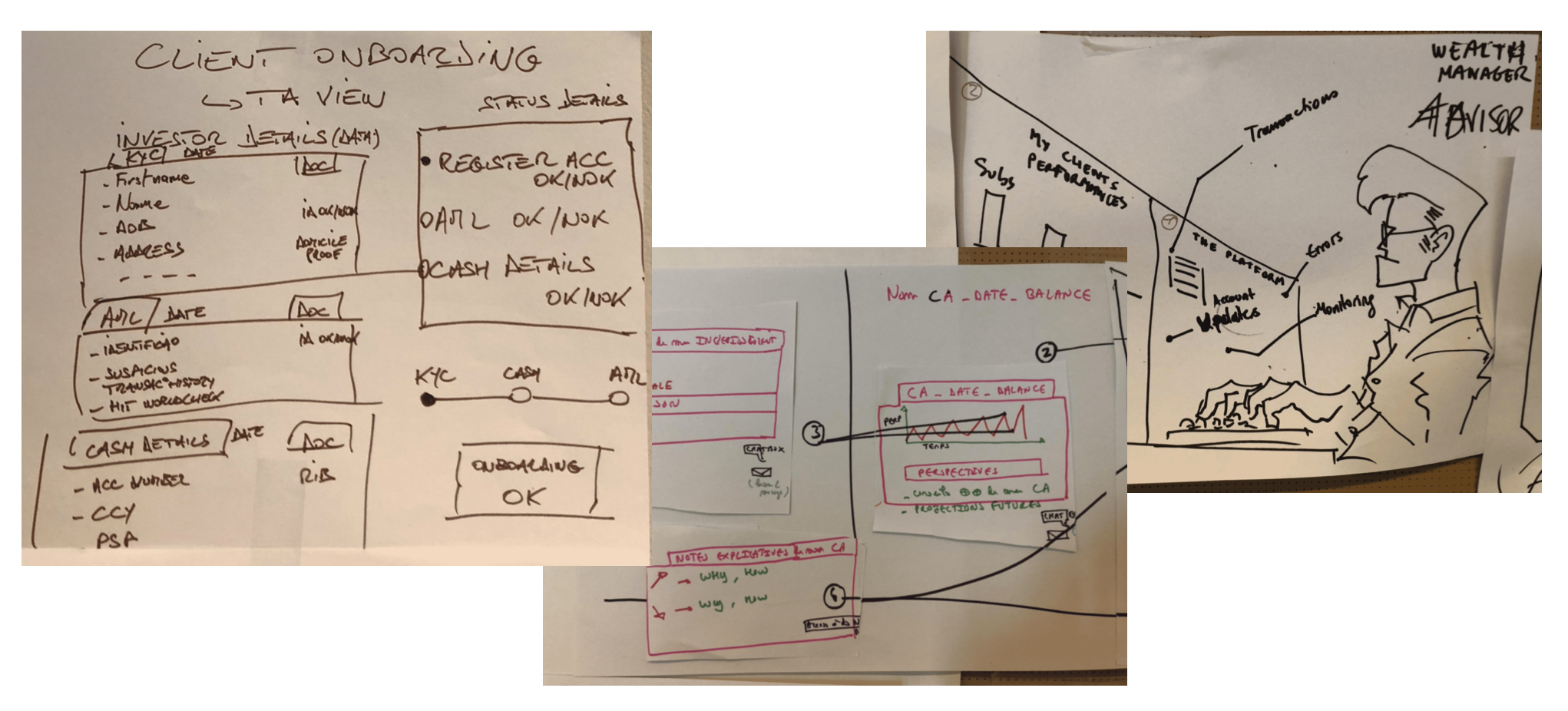
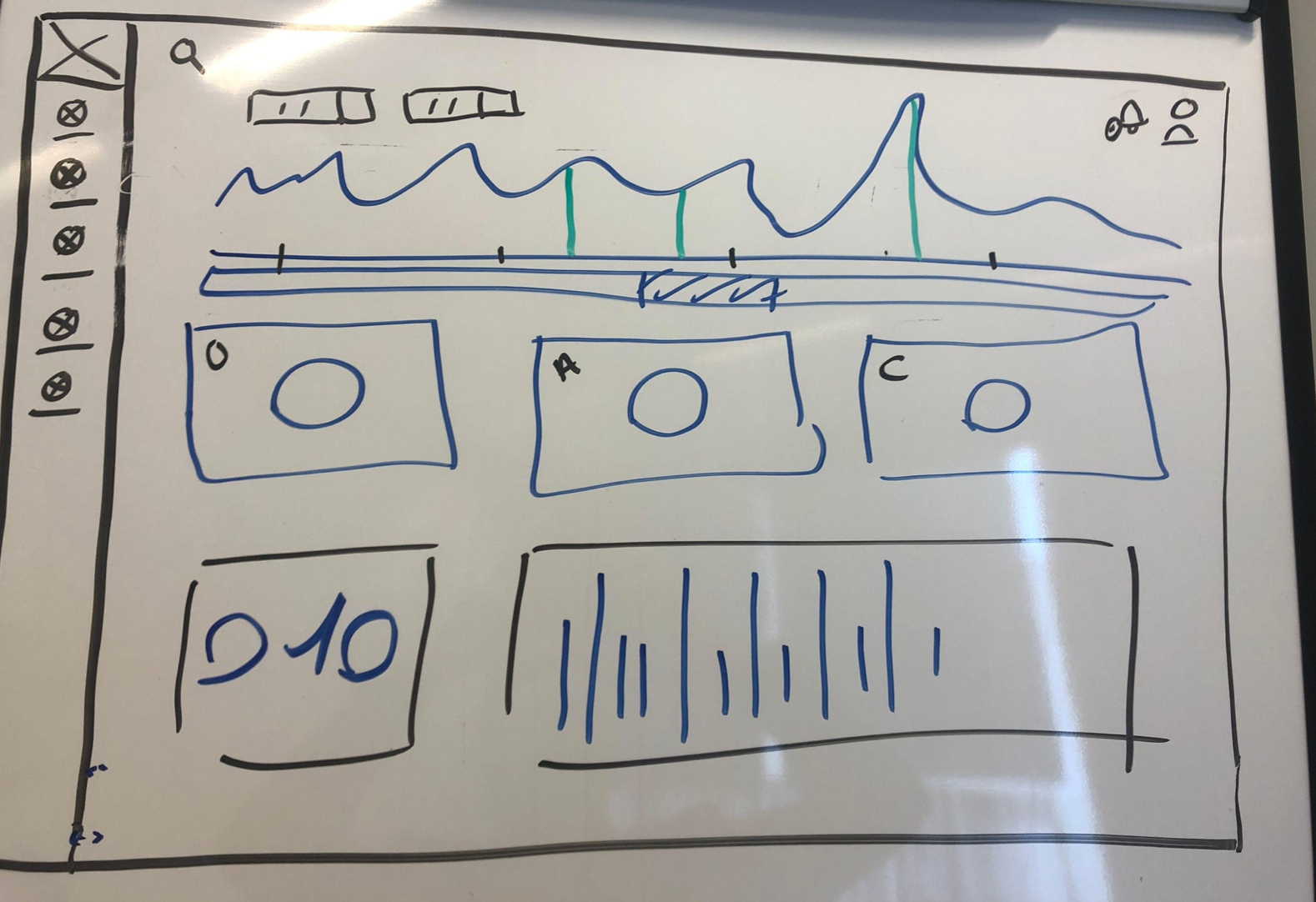
- Multiple sketching sessions in workshops with stakeholders and analysts
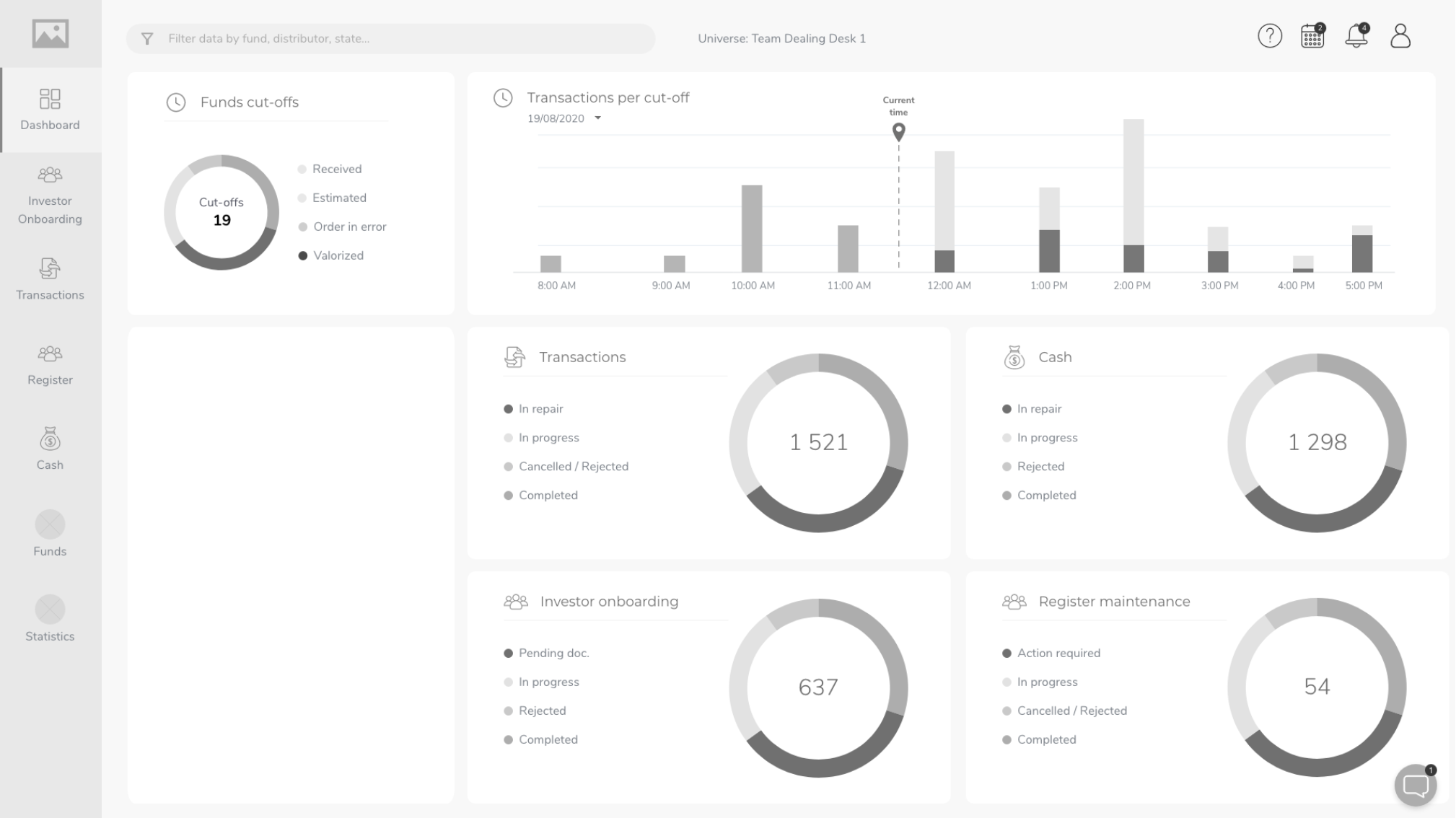
- Wireframing in collaboration with stakeholders and analysts
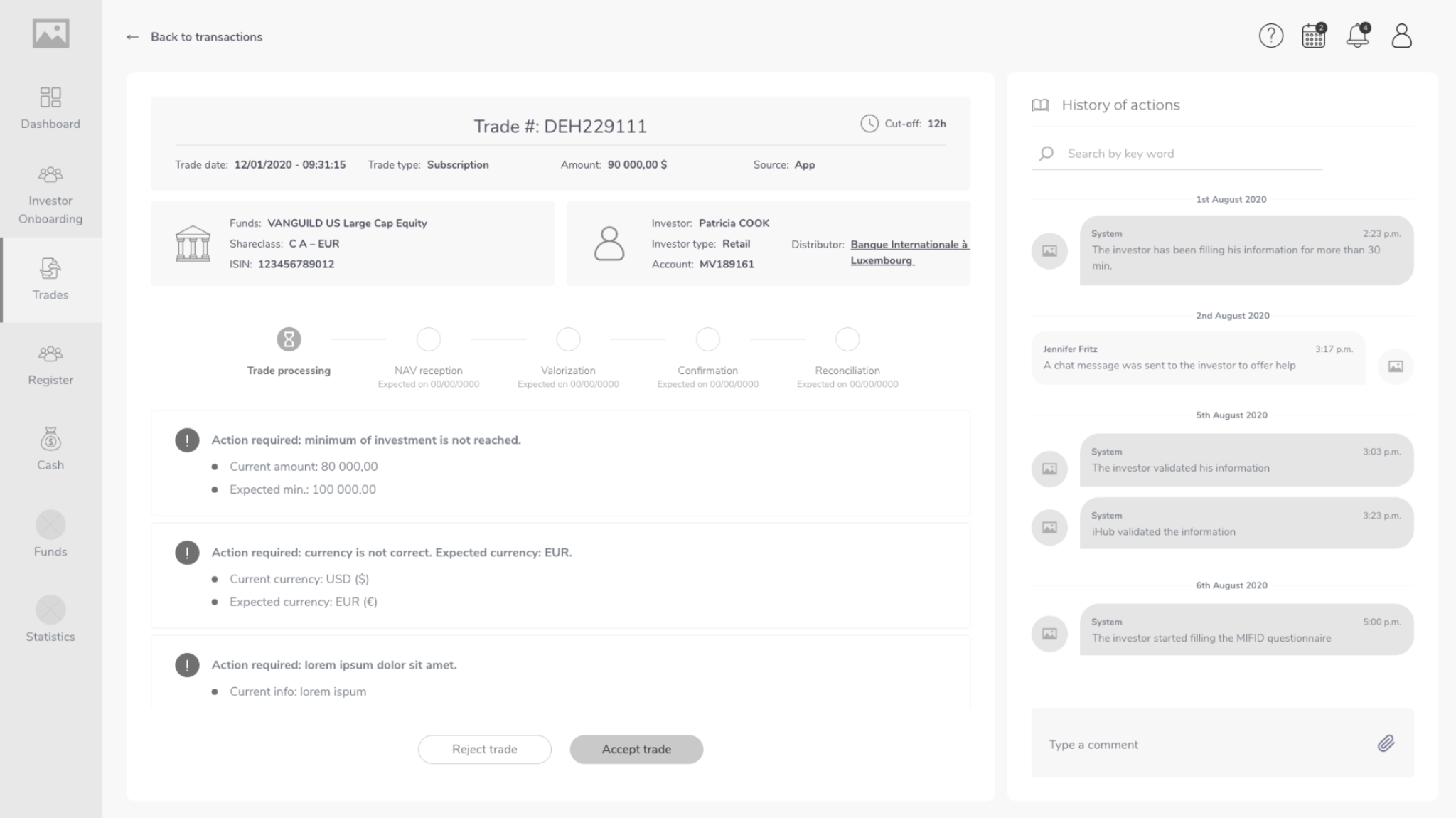
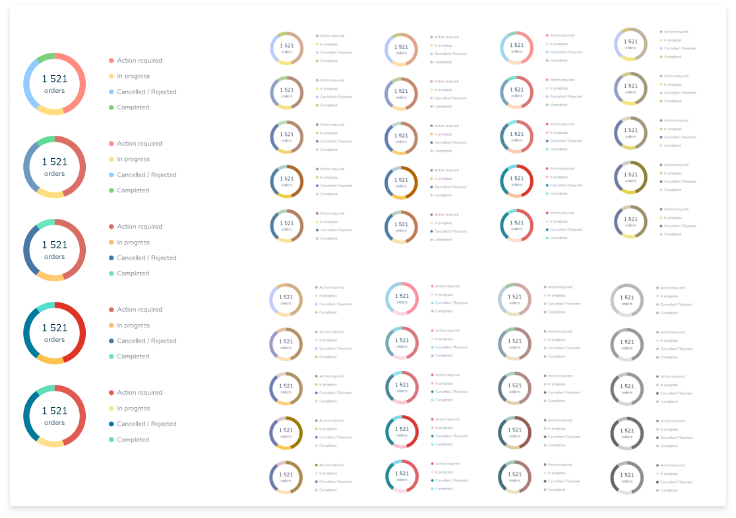
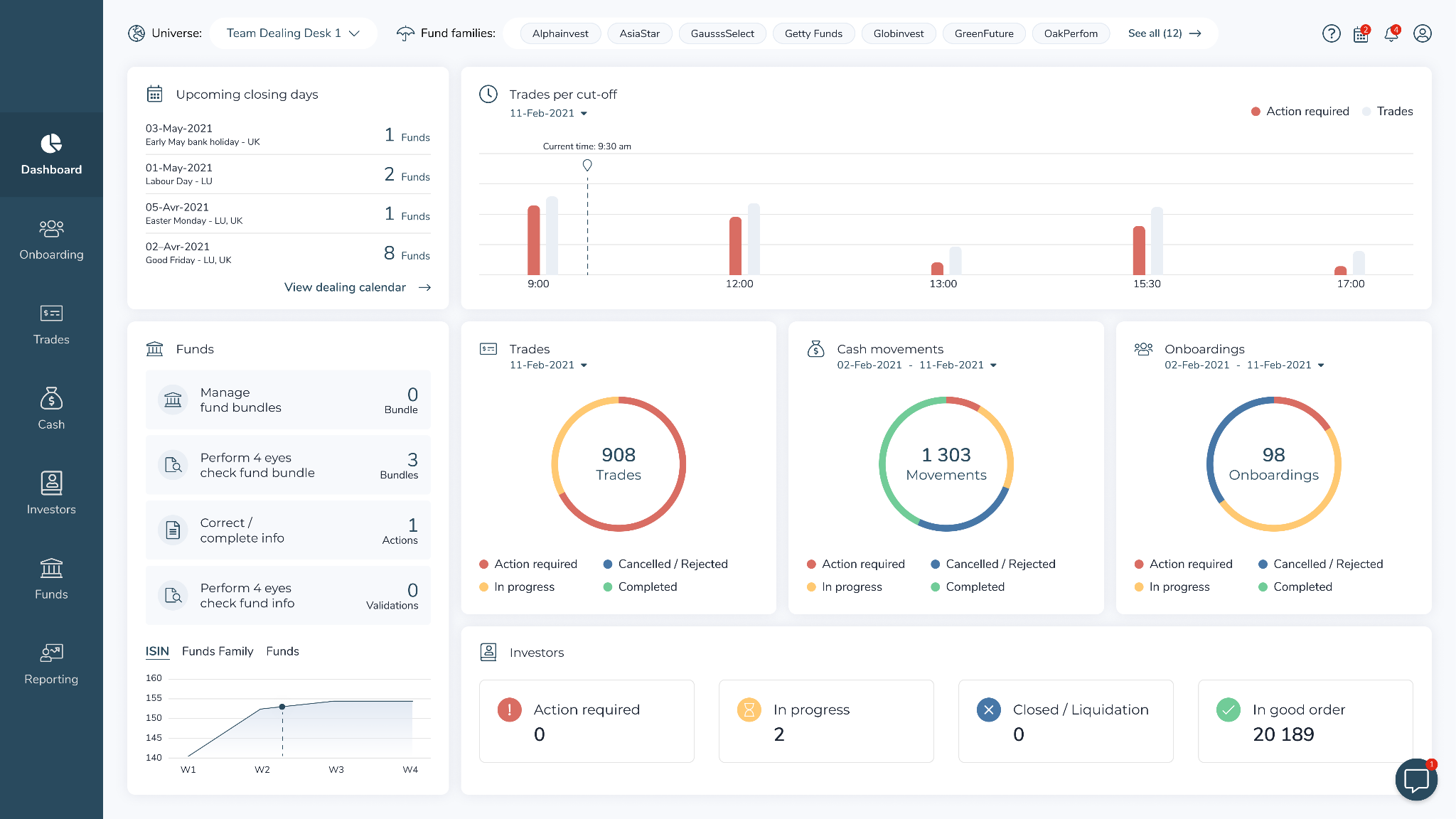
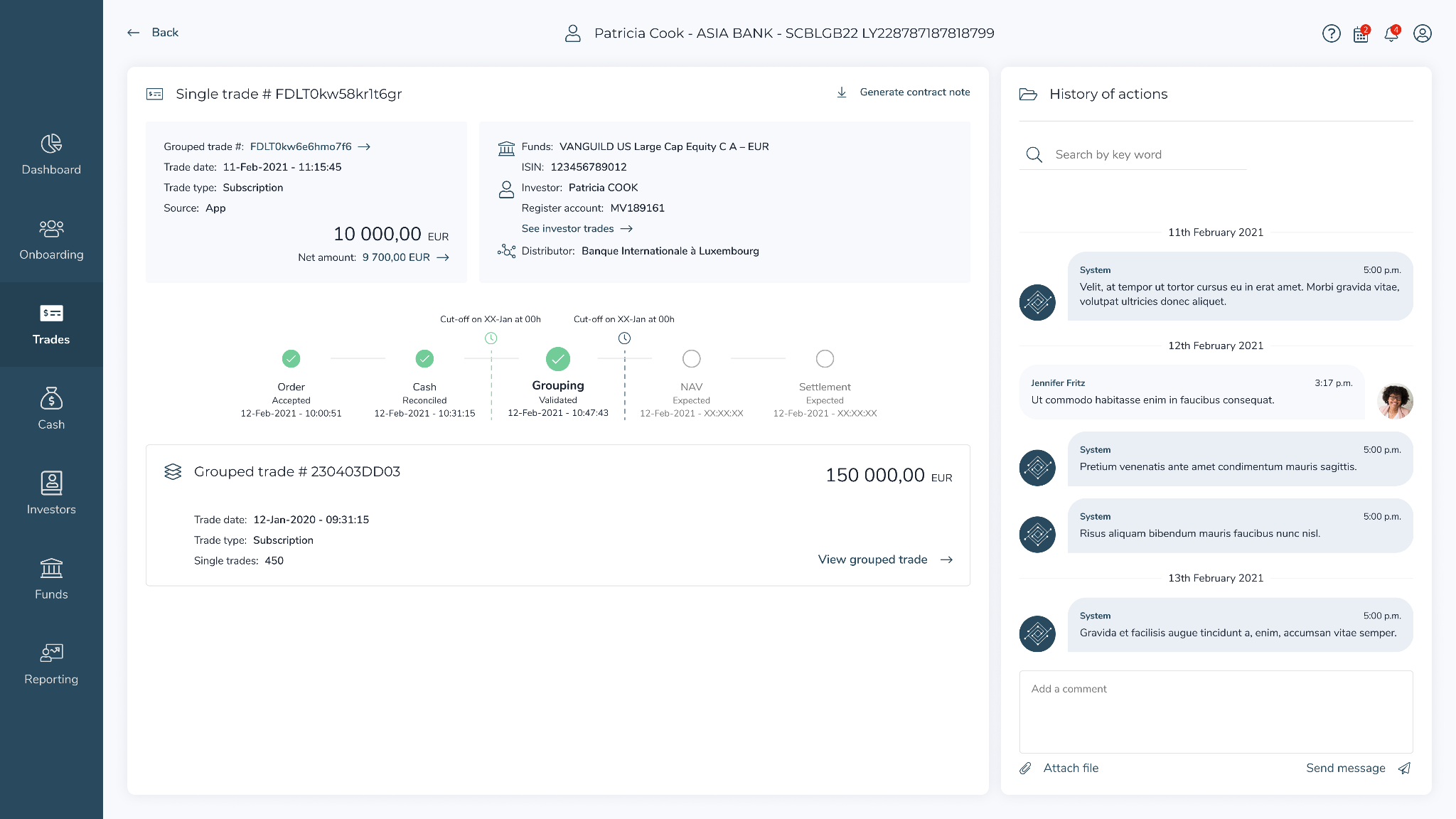
High-fidelity mock-ups and UI library built in parallel (focus on data visualization accessibility).
5. Evaluation
- Round 1: usability testing on wireframe prototype, with internal stakeholders
- Round 2: usability testing on wireframe prototype, with potential users
- Round 3: usability testing on high fidelity prototype, with potential user
Examples of test findings:
- Many statuses used to monitor transactions, onboarding of new investors, cash movements, etc. were unclear or insufficiently precise.
- Some relevant information was missing, e.g. transaction value date on transaction page.
- Some information was redundant, e.g. investor details on transaction page.
6. Implementation
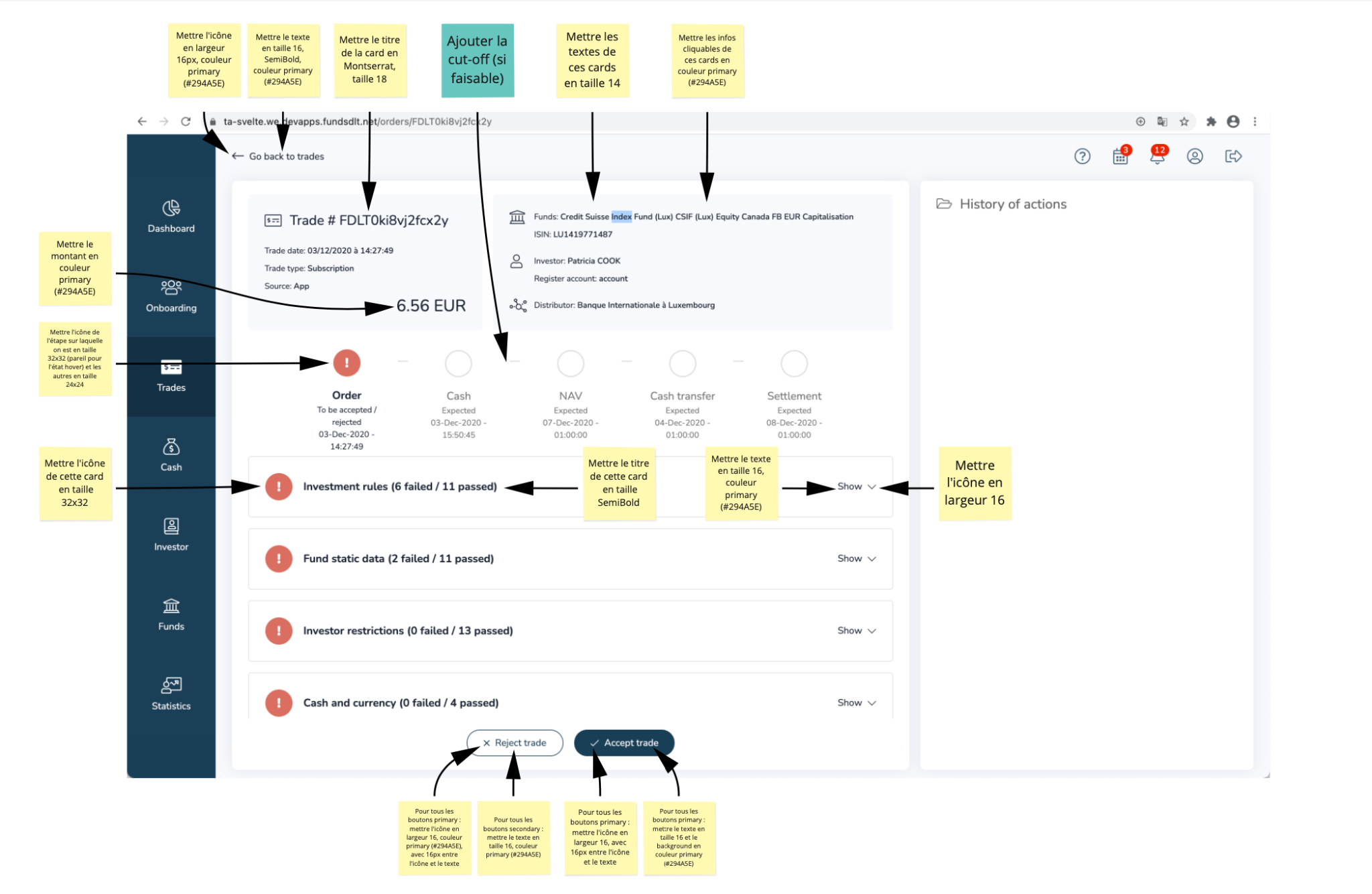
- Design handoff to developers
- Design QA of the developed interface
That first phase gave FundsDLT a product to build on. What came next was harder in different ways.
Act 2 - Leading design through growth and constraint (2021–2024)
In June 2021, the lead designer left the mandate. I stepped up to lead the design effort, still as a consultant. A few months later, the company transitioned to agile scrum, which changed how design needed to operate: we embedded into the squads, split rituals by theme, and shifted from working in phases to working continuously alongside product and engineering.
In April 2023, FundsDLT hired me internally as Lead UX Designer. Shortly after, our resources were cut from three part-time consultants to a single full-time one. Over time it became clear this person wasn't the right fit for the project. I had to do something uncomfortable: ask the consultancy firm to make a switch. I managed that conversation, interviewed the replacement, onboarded her, and set up a monthly one-to-one to make sure she was finding her footing at FundsDLT. It wasn't a process anyone handed me. I built it as I went.
When her mandate ended, I made the case to our CIO to hire a permanent designer rather than cycling through another consultant. I drafted the job post, built an interview framework including a design exercise, screened candidates, and organised the process end to end. The designer we chose relocated from Canada for the role. She joined as a junior and grew quickly, in large part because we worked closely together and I gave her real ownership early. When I decided to move to Canada myself in 2024, I ran the same process again to find my replacement, updating and adapting the framework I had built. I found a designer perfectly suited for the role, who relocated from Italy for the job.
Keeping research alive
With two FTEs covering three squads, user research was getting around 13% of our total design time, enough to keep it alive, not enough to make it systematic. Getting access to external users required management sign-off before any client contact, which meant long lead times between rounds. Rather than waiting, I ran usability testing and interviews with our internal users, the team responsible for customer support, who used the platform daily and knew its friction points intimately. I also built templates to make research more repeatable: a guerilla testing template, a post-onboarding questionnaire, and a periodic UX measurement questionnaire. When external access came through, I organised research rounds with clients who had already onboarded or were about to. Keeping that practice alive required ongoing advocacy. Some stakeholders got it. Some needed convincing every time.
Connecting design to engineering
I set up a weekly meeting with the frontend developers to work through components together, aligning what they had built in code with the Figma components in our library. I pushed to involve frontend and then backend developers in feature and flow discussions with product owners and stakeholders, to surface tech constraints early and give developers a genuine voice. I also pushed for the design team to be embedded in the agile rituals of the three squads, splitting standups, sprint planning, and refinement sessions by theme. By late 2023, product owners were involving us more spontaneously and we had real influence on the product backlog.
Two process changes I introduced that outlasted me. Design QA became a systematic step in the squad workflow in ClickUp, our project management tool. Design work became visible in ClickUp with a dedicated status before implementation, so nothing disappeared into a handoff gap.
To complement all of this, I organised internal lunch and learn sessions to share our UX practice with the wider company. In 2023, UX was still seen by many as a delivery function. There was no UX voice in management. The sessions were one part of a longer effort to change that, alongside more regular reporting to management and involving colleagues in research activities. It was slow work. But by the time I left, the dynamic had shifted.
What I left behind
By the time I left in 2024, the Figma component library we had built and migrated to from Adobe XD was well-structured and systematically maintained, with components reused and evolved consistently across the product. Five clients had successfully adopted the platform. And the design function had grown from a small consultancy arrangement into a structured internal team with its own processes, rituals, and recruitment pipeline, one that could keep running without me.
Post a comment